Showing posts with label mother of six. Show all posts

Wednesday, June 20, 2012

All you need to do is point your kids in the right direction


I refer to the letter "It's not the tool, but our own insecurities" (June 15) and the issue of sending children for tuition, for which the common reasons given include the need for them to do well, so as to climb the education ladder.

When I was growing up in the 1970s, my family could not afford tuition. Our cousins always did well in school, and we hated family gatherings, where grades were compared.

Wisely, my father ignored such conversations and left us to struggle our way through.

All of us made it to university. Now, we all have families, and our cousins are engaging tutors. One of my neighbours is looking for a third tutor for her son, as she feels that two is not enough.

My friend spends her weekend chaperoning her youngest child from one enrichment class to another because her two elder sons were tutored into the gifted education programme.

But is this the only way?

If a child requires excessive tuition to gain a place in university, he might end up being learned and obtaining a degree for the workforce, but might miss out on education in its totality.

We chose not to engage any tutors for our children, believing that tuition, where the focus is on completing homework, doing one more worksheet or attempting one more assessment book, cannot fully develop the joy of discovery and learning.

Once our children discovered this joy, they became self-directed learners who found their own drive to study, to do well in examinations and, most important of all, to be educated.

Instead of tuition fees, we invested in a good library for our children. They love going to Bras Basah Complex, where there are many second-hand bookshops. A high literacy level is the best gift for children, who would then be able to learn anything on their own.

Parents should be there to encourage, probe and challenge their children and to provide opportunities for them to ask questions.

To prepare children for the 21st-century workforce, where information can be outdated within six months, where lifelong learning is a necessity and not a luxury, parents must provide children with the learning process, not learning outcomes such as grades.

Once the process is in place, the results would come.


The writer has one child studying in Nanyang Technological University, one in National University of Singapore and one completing a diploma with At-Sunrice GlobalChef Academy

This letter was first published in Today on teh 20th June 2012.
http://www.todayonline.com/Voices/EDC120620-0000007/All-you-need-to-do-is-point-your-kids-in-the-right-direction

Proverbs 22:6

Monday, February 27, 2012

It's not i-Family time

The other day, while having tea at Ya Kun, I noticed their motto: "The toast that binds". Sitting next to our table was a typical family, two parents and two children. The mother, who was in her 40s, was playing Bakery Story on her iPhone. Her children meanwhile sat quietly waiting for their toast to be served.
When the food arrived, everyone ate in silence and at the end of the meal, everyone started to work their finger muscles by swiping their iPhones.
In modern Singapore where most parents have to work, sometimes having sit-down family dinners is a luxury. Yet on the few occasions when the family does find the opportunity to have dinner together, I have noticed the ubiquitous presence of the iPhone or iPad.
Some parents use the iPhone as a pseudo-sitter for their two- or three-year-old child. They justify this by explaining that it keeps their children quiet. Others claim that they must log onto Bakery Story or else all the bread they have baked online would have burnt. Some reason that they must be contactable 24/7 or they might miss out on an important contract if they do not answer every email.
Professor Philip Zimbardo, a psychologist at Stanford University, did a study recently and was worried that only one in five families sit down together. In America, they have also begun to discuss family values, and the professor said Americans cannot have family values if they do not even have family meals together.
But, in this i-generation of the iPhone, iPad and iPod, the purpose of a sit-down together is defeated if these devices of self-centred amusement (so aptly prefixed with 'I') become part of the family meal.
My family also finds it a challenge to eat together, as three of the older children are pursuing tertiary education and are seldom at home. So we would have late-night supper or early morning breakfast.
Sometimes friends and family join us, and one of the rules we firmly enforce is that these i-devices not be present at the table. I remember once requesting an acquaintance not to take any photos of the food - she had this irritating habit of stopping us from digging in when each dish was served because she insisted on uploading everything she ate onto Facebook.
Needless to say, we no longer share any meals, as she cannot eat if she does not post on Facebook and I will not eat if she does.
Imagine what it would be like having a meal without these i-devices. Our children might learn to see to others' needs instead of grabbing the food they like. They may learn to show respect to older members of the family as they wait their turn for the chicken, or invite their grandparents to eat.
Yes, they may fight over the otah, and that is where we can help them develop family values like sharing. They may even learn to have a decent conversation and hone their social skills.
During our family meals, the men and boys have to ensure that only after their mothers, sister and the youngest have taken their share, would they then take theirs. Some may say this is an archaic etiquette that is no longer relevant in this post-modern feminist era, but this is how we hope to produce gentlemen.
The girls, on their part, are expected to help prepare the meals, set the dishes and wash the plates alongside the boys. This is to ensure that the girls do not develop an entitlement attitude since the boys must let them pick first during the meal.
If we do not take steps to have proper family meals where there is laughter, interaction, exchange of news and information, I am afraid that all the effort to develop values in our children will fail, as we abdicate this vital function to the school, teachers and Ministry of Education.
Frances Ess is a mother of six.
URL http://www.todayonline.com/Columns/ParenttoParent/EDC120226-0000001/Its-not-i-Family-time

Sunday, January 8, 2012


Let traditions take root
04:46 AM Jan 08, 2012
by Frances Ess
Every year without fail, the entire family would troop down to the Thomson Road nurseries to hunt for a Christmas tree.
When the children were younger, it was a much easier process as everyone would be home and we could go any time in November or December. Last Christmas, it took military precision to execute this exercise with our six children, aged six to 22, to coordinate.
First, the event was announced on the family Facebook closed group. A date was selected, but it was rejected as one child had to work, while another had to go for a church outing. Another date was proposed, and it was accepted provided we could be done by 1pm as another child had to go online to apply for her courses at a local university.
Still, the occasion was filled with much fun and joy as the older children showed the younger ones the art of selecting a tree. It was good to see the family tradition passed down from one generation to another.
While watching Mary Poppins, a phrase from the song The Life I Lead caught my attention. It argues that tradition, discipline and rule are what you need to run a British family, or else there will be disorder, catastrophe and anarchy.
While we do not subscribe to ruling the family and our children with an iron hand, we discovered that, if we provide our children with a balance of tradition, discipline and rule, it would help them to navigate obstacles in life's playground.
In this globalised century, where our six-year-old understands the concept of Skype and protests that he does not wants his pictures to be posted on Facebook, unconsciously we are allowing this interconnected and integrated world to form part of his rituals and traditions.
For example, some of us will not believe an event has taken place unless it has been posted on some trusted website. Our children no longer take the textbook as the gospel truth, and turn to Google or Wikipedia to seek answers.
Dr Diana Oblinger observed that, by age 21, our children will have spent 10,000 hours playing video games, sent 200,000 emails, watched 20,000 hours of television and spent 10,000 hours on a mobile phone. This implies that our children could miss out on the opportunity to develop social and emotional skills. As our children's brains become digitally rewired, they may find it more difficult to interact with other human beings.
In addition, information and knowledge, data and facts are changing and being updated constantly. In the world of Facebook, there are some who constantly update their status with what they eat, where they are going and who they are with.
Although we have to train our children to understand that change is the only constant and that they have to learn to adapt, there is value in following some family traditions. They give the children a sense of continuity, of being rooted, of belonging to a community.
It provides them with a feeling of expectation, of waiting for something to happen, and thus develops patience - a virtue which is becoming more scarce as our children complain when a website takes more than 10 seconds to load.
In Singapore, we have many great family traditions that are threatened by the digital age, and we must guard against them being eroded. For example, Chinese New Year is around the corner, and we should ensure that it is a time for family members to interact and catch up on the past year's happenings.
But more and more children might prefer to stay home and hooked up to the digital world rather than go visiting. We need to ensure they learn how to show respect to our relatives and elders by continuing this beautiful tradition.
We may be accused of being old-fashioned or sentimental. But without developing and following traditions, we are depriving our children of the roots with which to anchor their lives. Of course, some traditions need to be updated and adapted. But as long as our children have some to fall back on, we are providing them some form of security to face the world.
Frances Ess is a mother of six.

This article was first published in Today 8.1.2012
URL http://www.todayonline.com/Columns/ParenttoParent/EDC120108-0000003/Let-traditions-take-root

Friday, November 5, 2010

Spare the rod


My youngest son Anicius, 5, stole a piece of fruit cake. When confronted, he denied that he had done so. Instead he said that his sister Ariel stole the fruit cake.

For this 'crime" he was caned the following times

1. Ten cuts of the rattan for nearly getting his elder sister into trouble
2. Another ten cuts for "arrowing" his sister
3 And finally the last ten cuts for lying.

At each session, it was explained to him why he was caned.

Of course it broke my heart to cane him.

Of course as an educator I would rather use the softer method of counseling, reasoning etc the list of humanistic psychology which Harvey C Bunke describe so accurately as the non judgmental approach in which standards of right and wrong are discarded and the individual is urged to determined his own pattern of behaviour... each must must decided for himself what is right and wrong.

But I have no intention of bringing up my children who does not know right from wrong.

Ultimately, I rather that we parents do the caning rather then wait for the prison or the court to do so.


This article was inspired by what I have read from this blog below
http://uncledicko.blogspot.com/2010/11/its-wrong-not-to-know-whats-wrong.html?showComment=1288887783766#comment-c6478710333698343843

Saturday, August 21, 2010


Would you object or raise a ruckus if the Heath Promotion Board (HPB) made a video with graphic depicting how to use a needle safely to inject recreational drugs into your child body on the grounds that everyone is already using recreational drugs and so there is a need to teach the students in secondary school how to safely use a needle?
Yet, I expect many people would condom the action of St. Patrick's School objection to condom video from HPB which promote the use of condom during sex and the graphic depicting on how to use the contraceptive.They would argue that many teenagers are already having sex and there is a need to teach them how to do it safely. Some might even argue that they do not see anything wrong with having sex outside of marriage.
While I cannot claim to have read the letter to the parents nor spoken to the HOD of Pupil Welfare, Nicholas Seet about the reasons for the objection, as a parents of three boys ranging from five to twenty one years old, I can understand and approval of the school’s decision.
By promoting the use of condom, we are teaching our students that the person that they are having sex with is only an object to satisfy a man’s carnal desire. The woman has been reduced to a vessel or a container to receive the male sperm.
By making a stand to object to the condom video, the school is sending a powerful message to the students to treat their fellow human as gift for each other and that a girl is more then a physical object. She is a person with needs, to be treated with consideration, care and respect.
Sex is no longer seen as an urged to be scratched but as an opportunity or a communicate tool to share deeply with someone you are committed for live.
In a world, where the fallacy of ad populum is committed everyday, I am glad that someone has the courage to stand up and fight for the right of woman to be treated as human being.
I would be proud to send my sons to St Patrick’s School.

Saturday, June 14, 2008


I have three sons. The eldest, will be completing his poly diploma soon and will be enlisted by April 1st 2009 for National Service, my second son will be nine soon and my youngest, will be turning three in August.

When my friend gave birth to her only son fifteen years ago, she took steps to migrate to Australia as she does not want her son to serve National Service. I have another friend who has five sons now living in New Zealand yet have taken the bold or may I say practical decision to ensure that all her five sons will serve national services.

I read with anguish the pain that Clifton Lam’s mother must be going through now. Although the Pilot Officer Cadet fulfilled his dream posthumously to be a pilot, I am sure that his family would rather he be alive.

If our sons and soldiers were to die in the line of fire or while on duty serving our country it might not be as painful as having them die from routine training. The sense of uselessness and futility is compounded and the search for answer must be forth coming so that the faith we have in the National Service system can be regained and rebuilt.

I must confess that I was tempted to follow my friend’s footstep and migrate in order that our sons need not go through National Services in the past.

But National Service is the backbone of our defense strategy. As our population is small, we do not have the luxury to have a large professional army. Singapore depends on her citizen army to defend and protect her.
Thus, most of us willing send our sons to do National Service yet worried for them. We have faith that the army will take care of them when they are in camp. The SAF have also improved it communication system in its effort to assure the parents that their sons are in good hands.

When my husband was enlisted over twenty three years ago, we were only allowed to see him off at a community center. For the next three weeks, his mother and I were in limbo as we do not know what kind of life he was going through.

Now parents are invite to Pulau Tekong to see the facilities and living conditions that their sons will be in before they start Basic Military Training. Food has been out sourced so that they are more edible now then before, they are provided with trolley bags with wheels so that they need not carry the heavy Ali Baba bags like in the past and they are transported in air-con comfort unlike before where they have to endure the boneshaker.

Yet two training fatalities in two days have result in a seismic shift in our trust in the training regime and system.

There is a need for the mothers and fathers to be convinced that there are system and check in place that will ensure that our sons do not die from a simple yet preventable ailment like heat stroke.

According to Dr. Bernard Loo, a specialist in defence studies at the Institute of Defence and Strategic Studies, safety regulations in the Singapore Armed Forces were already one of the most stringent in the world.

What more could the SAF do to re-assure parents that their sons are in good hands? Perhaps it is time to change the mind set of the training system. Maybe our soldiers must learn to draw the line and learn to say no when they do not feel well.

When I was growing up in the 1970’s there was this pop song with this lyric
“Billy, don't be a hero! Don't be a fool with your life!”

Perhaps it is now time to look at the attitude and beliefs of our soldiers and trainer officers towards training. After all,training systems, regulations and procedures are run by people.

Are there too many “heroes” in the SAF?

The writer is a mother of six and believes that NS a vital part for the survival of Singapore.

Saturday, December 15, 2007

Free Choice


We have been the laughing stock of many people when they discover that we have six children as it is very unusual for a family with professional working couple to have so many children.

Some who know a bit about natural planning would snigger and laugh at the failure of this method. Others mistake this method as the unreliable rhythm method.

When we were planning to get married, we decided to examine all possible option of family planning. Of course being in the Catholic Church, we were encouraged to consider the option of natural family planning (NFP).

After reading up on the various methods of family planning, we discovered that artificial birth control(ABC) like the pills, IUD and abortion have several side effects that are not usually presented to women and so many were not given an informed choices.

For example, if you accept the premises that life is conceived when fertilization takes place or at the moment of conception, then you will not consider the use of IUD. An IUD or Intrauterine Device is a small piece of plastic which contains either copper or the hormone progesterone. The IUD prevents pregnancy by many mechanisms including preventing fertilization of an egg by sperm or preventing implantation. This means that if conception does take place, the foetus is not given a chance to survive.

We also decided not to use the pill or condom because of the side effects associated with these form of contraception.

We finally decided on the natural family planning method not because the Catholic Church said so but because it does not have any side effect. It does not harm the man nor the woman’s body and best of all this form of family planning ensure that we have a healthy sex life.

After practicing NFP for the past twenty years, I can safely says that this method has contributed to ensure that we are constantly and consistently attracted to each other sexually.

You see, sex is like eating durian. Many of us love the taste of durian and the first bite is the most exquisite. Yet after eating five or six durians, the law of diminishing returns set in and you begin to get tired of the durian. However, if you pace yourself and do not stuff durian down your throat then your desire for durian will last a long time.

It is the same with sex. If you can have sex anytime, anywhere and any how, the sense of excitement will diminish over the years. Often a woman using ABC would feel that she is nothing more then a sex object existing just to satisfy the man.

With NFP, we are trained to identify the period when a woman is fertile and so we can exercises the option not to have sex during this period so that we do not conceive. During this period of waiting, our sexual passion is simmering like a good pot of stew slowly stewing over a fire. When the fertile period is over, it is fun time. We can enjoy sex freely without the worry of any health concern or side effects that ABC brings.


With NFP, I am assured that my husband do not use me as a sexual object to satisfy his animal instinct as he is called to scarify during the period when I am fertile. By this action, he also assure me that the chance of his having affair is not high as he is given the opportunity to discipline his sexual appetites. Because we have to wait for the infertile periods to have sex, our sexual desire increases for each other.

Far from restraining our sex life, NFP if practiced with the appropriate attitude, free us from behaving like animal. Instead NFP has helped to keep the passion of fire burning for the past twenty years.

If you do not believe me, just ask anyone who is using ABC if they and see if their sex life is still so exciting after twenty years with the same person.

Friday, December 7, 2007

What’s wrong with the Golden Compass?


During this school holidays, my daughter and some of her friends from Church decided to check out the movie The Golden Compass. They have received an email explaining why Catholic should not view this movie.

When she came back from the movie, we asked her how the movie was and she said that it was just a fantasy movie and did not see why some Catholic has called for the boycott.

Being a teenager, we know that our daughter would not accept our explanation if we put our foot down against her reading the book which would be a natural follow-up to watching the movie.

So we decided to watch the movie ourselves and we were troubled by some of the ideas that were seeping through the mask of entertainment.

According to the Catholic League of America

"It is [Mr. Pullman's] objective to bash Christianity and promote atheism to kids.

"The Golden Compass" is a film version of the book by that name, and it is being toned down so that Catholics, as well as Protestants, are not enraged.
The second book of the trilogy, The Subtle Knife, is more overt in its hatred of Christianity than the first book, and the third entry, The Amber Spyglass, is even more blatant.


Because "The Golden Compass" is based on the least offensive of the three books, and because it is being further watered down for the big screen, some might wonder why parents should be wary of the film.

The Catholic League wants Christians to stay away from this movie precisely because it knows that the film is bait for the books: unsuspecting parents who take their children to see the movie may be impelled to buy the three books as a Christmas present. And no parent who wants to bring their children up in the faith will want any part of these books."


I am glad that we did not forbid her to watch the film based on what we have read from the Catholic League. If we had done that she would have judged us to be no better then the Magisterium.

But what is the Magisterium? To answer that question we have to examine the book in which this movie was based.

The book, published in 1995, is an allegory that assault the concept of organized religion -- more specifically, any religion that rules by fiat and claims an exclusive pipeline to the truth. The book describes a world ruled by a pious, punitive outfit called the Magisterium where its leaders try to repress knowledge in the name of protecting humanity. It main aim is to crush curiosity and freethinking and tighten the Magisterium's grip on power.

The Catholic League had issued a press release warning that the "watered down" theology of the film will lead unsuspecting parents to take their kids to "The Golden Compass," which will lead the kids to ask for the books for Christmas. "And no parent who wants to bring their children up in the faith will want any part of these books," the statement read.

After watching the movie we could explain to our daughter the concerns that we had with this movie.

We felt that the Magisterium is a thinly disguised reference to the authority of the Catholic Church. The movie encouraged the heroine to exercises free will without considering the consequence of her choices.

Yes at times the Catholic Church may seem autocratic especially when it speaks out against abortion, non-material sex and contraceptives. We explained that we choice to follow the Catholic Church teaching because it has never stop us from exercising our free will but it has always reminded us that the use of our free willing will always has it consequences. For example, the use of birth control has series and sometime harmful side effect for the woman but it has never been actively considered by those who want to have sex anywhere, anytime and any how.

We felt that the movie encourages the value of exercising free will for the sake of being free to do what one wishes without the consideration of the consequences that it will bring.

In the movie, the heroin Lyra asked what Dust was. This is answered in book three entitled The Amber Spyglass, Chapter 2 and I quote:

"The Authority, God, the Creator, the Lord, Yahweh, El, Adonai, the King, the Father, the Almighty - those were all names he gave himself.

He was an angel like ourselves - the first angel, true, the most powerful, but he was formed of Dust as we are and Dust is only a name for what happens when matter begins to understand itself.

Matter loves matter. It seeks to know more about itself, and Dust is formed. The first angels condensed out of Dust, and the Authority was the first of all. He told those who came after him that he had created them, but it was a lie."


In Book 2 entitled The Subtle Knife, it was explained how God can be killed

"'The knife,' he went on after a minute, 'they never knew what they were making, those old philosophers. They invented a device that could split open the very smallest particles of matter, and they used it to steal candy. They had no idea that they'd made the one weapon in all the universes that could defeat the tyrant. The Authority. 'God.”


I am glad that my husband and I embarked on this journey with our daughter together. We deiced to let her watched the movie when she asked our permission and did not talk down to her with our concern about the movie. Instead we watched it too and so could explained with conviction and confident why this movie is a concern for us with respect to the nurturing of her Catholic faith.

We believe our daughter should be given the freedom to question, to examine and to challenge those of us who are in authority. This does not mean that we are encouraging her to be disrespectful but through this process of inquiry she will be able to discover the truth instead of having the truth ramp down her throat.

As parents, one of our most important roles is to listen to our children first when they have doubts, concerns and questions. We should not be too eager to expound, explain or elucidate to them before they complete their inquiry as this will only serve to widen the generation gap. Only by offering a listening ear, we will be able to close this gap.

Thursday, August 23, 2007

Our eldest son Angus 18 with our youngest son Anicius 2.


MY ELDEST son will turn 18 this week. He will be old enough to drink legally
and his college mates have been waiting to take him to a pub. He can buy beer,
cigarettes and even condoms legally. As his birthday approaches, I wonder
if my husband and I have brought him up well.

Will he give in to peer pressure and live a life that we consider decadent? Will
he consider alternative lifestyles which we are not yet ready to accept? What happens
if he chooses to marry someone who is of a different race or religion from us?

Given that he is our eldest son, we had to learn by trial and error as parents
and realise our mistakes along the way.

In reflection, we realise that it is now easier to bring up the rest of our children
because of him. In a way, children are like dogs, we discovered. They can be trained when they are young but once they hit their teens, it is as good as trying to teach an old dog new tricks. To teach our son responsibility, we used to put a reasonable
amount of money in the moneybox for him to take for recess. If he spent it before
the next allowance was due, he had to remain hungry.

He learned to obey the rules that we established. For example, when he played in the park, we expected him to set the time limit and to return home on time.

So, when he became a teenager, he was already used to a curfew and tried to return
by 10pm. And if he needed to return later, he was expected to call.

Now, we will have to continue this process with our youngest child who will
be turning two in August. Already the little tyke is testing our will, just like his
older brother 16 years ago.

He is learning to establish his identity and is exploring how far he can push
his boundaries.

We realised that if we teach our youngest son now, we should be able to avoid some of the problems that parents encounter with their teenagers.

One of the problems with many families in Singapore is the dual-income situation,
ie both parents work to bring home the bacon. Ours is a typical family with the maid
being the main provider of household services.

Many parents take the easy way out and expect the maid to be a surrogate parent.
Kids sometimes end up being used to giving orders to the maid and expect
adults to obey their every whim and fancy.

It is no wonder that such children tend to find it difficult to listen to their parents.

Our children have learnt to obey us as they know that the authority lies with
us, the parents.

We are the final arbiters of privileges, punishments and penalties. When
our children break the house rules, we have to ensure they bear the consequences
of their actions.

Now that my son is close to being an adult, we have to learn to cut the apron
strings too.

All too often, we are tempted to provide him with a solution when he encounters
problems.

But now we have to learn to listen to him more for him to work out his difficulties
himself. As parents, we always proclaim that we want the best for our child. But is the best really for him or for ourselves? When we help him to make a career choice, is it based on sound judgment or based on our unfulfilled dreams? When we give
him opinions about his girlfriends, did we base our views on the kind of daughter-
in-law we want or on the one he can love?

Ultimately the best birthday gift we can give our son is not another guitar or
hand phone but a pair of wings to fly and explore his brave new world.

Sunday, July 22, 2007

When the stock comes a calling


Having been pregnant six times, while holding a full time job , I would like to state once and for all that being pregnant is neither a medical condition nor a disease. With a few simple considerations and courtesies that we normally offered to senior citizen workers or the disabled, pregnant woman can remain equally productive and efficient.


Yes we do suffer from discomfort like swollen legs and back pain but most of us are made of stronger material then soft tofu. While carrying that extra bundle around, several of my friends have travelled to as far as USA for business trips.. Often we continue to work overtime, taking simple precautions like lifting our leg up regularly or putting a cushion behind our back.


Of course, we cannot be expected to carry heavy objects around but as Singapore is a developed society, most of our jobs are found in the tertiary or quaternary industry where we used our brain more then our brawn. Beside in the agricultural society, women are expected to continue to plant and harvest rice when while they are pregnant.


My husband and I did not employ a confinement maid after the birth of our first three children, nor did we accept any help from our mothers. Neither did we have a live in maid. We were young and we wanted to bring up our children our ways without the interference of maids, mothers or mystifying myths surrounding child birth.

I had three children within fours years and managed to remain in good health despite horror stories being circulated about not having a confinement maid. During that one month of rest, I continue to wash clothes, cook, clean and to shop for grocery. I breast feed my children for at least six months. And yes I did bath and wash my hair.


When I had given birth to my sixth child, we could not get a maid in time before I return to work one month later. I entrusted my new born baby to the care of my other children and the baby survived.


Of course my experience is an exception to the rule and some might considered it an extreme that I do not conform to the expectation and demands of the society.


The decision to have a child is a difficult choice to make. We have to consider our financial capability, our time available for each child, our career prospect and our parenting skills.


Too often, we hear our friends complain that it is so expensive to have a child in Singapore that they refused to have any at all. If we examine this argument carefully, we realized that most of the time it is what they want for the child that is expensive and not what is needed.


Our gynecologist, Dr Tham, who delievered 4 of our six children.


For example, we did not engage a specialist from a private hospital for our first child but a register from NUH to look after my gynecological needs having full faith in our health system. Secondly instead of spending up to fifty dollars a week on baby formula (incidentally cows milk is best for the calf) we decided to breastfeed our babies. Thirdly, we did not send our babies and toddlers to enrichment classes where we pay a bomb for them to do activities that can be easily completed in a play ground.


We did not have a car which we did not consider as a necessity nor did we bother to provide our children with expensive birthday parties. We welcome hand-me-down clothes from our relatives and friends and do not see the need to outfit our children with expensive brand clothing. Visiting the out patient clinic is as good as a visit to a pediatrician. Nor were we seduced into buying expensive prams, crib and other unnecessary accessories.


What our children need most is for us to offer a warm home with laughter and a good measure of discipline. The love between a husband and a wife is the best give that any child can received and this is something that cannot be bought with money.


Of course society in general and employers in particular must change the perception pregnant woman are a burden to their company. Unless this is corrected in time, the amount of baby bonus and other procreation incentives will only falls on deaf ears and the stork will not be able to deliver any more bundles of joys to Singapore.


The write is a mother of six and is taking every precaution to prevent the stork from delivering another bundle but if the stork chooses to do so, the bundle will be received with joy.

Friday, May 18, 2007

Have a reunion dinner every day.


EVER since my two older children started attending polytechnic last month, it has been difficult for us to have a family dinner together.

On some days, my son comes home at 10pm, after his guitar club activities. On other days, my daughter stays over at her grandmother's, which is near the poly, as her sports training ends at 8.30pm.

We still try to have family meals with four of our six children. But it does not feel quite the same.

As a busy career woman, I too have been guilty of delegating my duty of cooking the family meal to my maid, even though my children and husband seem to think that my maid's cooking can never replace mine.

I remember when I stood at the stove for over two hours stirring a pot of chicken porridge while my two daughters sat nearby shredding the chicken. We had so much fun chatting and laughing. Sadly, these cooking sessions are few and far between.

Often, I gave the excuse of being too busy with work or being too tired to cook dinner after a hard day's work. Recently, however, I have been reminded of this curious event by one of my friends.

Ever since its inception in 2003, a yearly "Eat With Your Family Day" has been designated to encourage families to eat together. Schools, companies and organisations in Singapore will be encouraged to stop work and end activities by 5pm so that the family can gather to have a meal.

This year, is slated for Friday, May 25, which is also the last day of school and so there should not be any remedial lessons, CCA or supplementary lessons for students.

I am determined to make this day a success. This does not mean going out to a fancy restaurant for a meal or cooking up a storm at home.

Instead, I plan to cook a simple beef stew. I'm looking forward to the smell of spices, onions and beef permeating through the kitchen. A plain salad of lettuce, tomatoes and pineapple would make a lovely side dish. As for dessert, I will simply open two cans of longans and add some fresh apples and oranges to it.

Since we do not have a television set, there will be no need to switch one off. A survey of more than 1,300 low-income families with pre-school children in America found that the benefits of sitting down to a family dinner are lost if the television is on during the meal. Registered dietician Lynn S Edmunds of the New York State Department of Health, Albany, has urged parents to turn the television off during family mealtimes.

So, what happens at the table if the television is switched off? As parents, we must not take this opportunity to turn it into a nagging, reprimanding or lecture session. Nor should we make it a comparison session, where we compare the achievements of one child with those of another.

Instead, we should try to make light conversation and generally have fun at the dinner table so our children look forward to this family ritual.

With our hectic schedules, my husband and I have discovered that the family meal is a great way to keep in touch with everyone after a busy day.

It is also a comforting ritual for our young children as it provides them with a sense of security. They learn table manners, how to behave at mealtimes, and to see to others' needs. For example, if the last piece of chicken is left on the plate, a child has to ask if anyone else wants it before he is allowed to eat it.

Our children also learn to co-operate as they set the table before meals and clear the table after meals. The older children do the washing.

A family meal is like a safe harbour to which our children can come home to take shelter. Why should we wait for Christmas or the Chinese New Year reunion dinner for a family meal? Every day should be an "Eat with your family day" as far as possible.

The writer, a mother of six, will try to gather her brood of children to eat on May 25.

Thursday, May 17, 2007


My two year old was throwing a tantrum recently. He has learnt that if he cries, his caregiver, the maid, would give in to his demand. But it cuts no ice with his five older siblings and his parents who were not about to give him any face.

As he was throwing his temper, he was made to stand and face the wall. Soon enough, he learnt that no one was paying any attention to him and so he decided to take his bottle of milk and lie down quietly to drink and fall asleep.

Too often, I have observed that parents nowadays are afraid to let their children suffer a little inconvenience or even pain. It has been a standard practice in our household that if any child so choose not to eat his meal at meal time he will remain hungry until the following meal time. There will no snacking or cajoling the child to eat junk food so that he does not remain hungry.

Recently, it was reported that a 17 year old JC student hit a bus-driver despite pleas from the bus driver to stop. The boy called his father crying when he realized that the police had been called. Instead of letting the boy face the music, the boy’s father was seen kneeling down in front of the bus driver to seek forgiveness for his son. Later, the boy claimed, in a written response through his school, that it was a misunderstanding and the violence ensured was accidental.

If one of my children is found to be in a similar situation, I would not bail them out. They have learnt from young that like Newton Law of Physic, for every action there is a reaction and they have been trained to face the consequence of their action. Moreover a violent act is seldom accepted as an accidental act.

Once, one of our children hit the maid. We did not side with our child and blamed the maid nor did we claimed that it was an accident and brushed the incident away. Instead we investigated and discovered that indeed he has committed a transgression for which he was punished appropriately. In addition he was made to apologies to the maid.

I can only guess at the possible reason why the father of this JC boy did what he did. Perhaps he did not want the boy’s bright future to be blemished by a police case. Maybe he was being over-protective. Or he could have pinned all his hopes and dreams on his boy who was studying in a premier junior college along Bukit Timah Road.

Whatever the reason, this incident has forced me to reflect on how far a parent should go to sacrifice in the name of parent’s love.

The father, who went on his knees to beg for forgiveness on his son’s behalf, has deprived his son of an opportunity to learn an important aspect of human relationship. He should have play his role as a parent and insist that the son kneel down and beg for forgiveness for his rash act.

Many parents, in their pursuit of academic excellence for their children, have failed or neglected to develop any moral values in their children. They made the critical wrong assumption that academic excellence would somehow automatically transform someone into a morally upright, ethical citizen of society.

Values like respect for others, care and concern for fellow human beings and honesty and integrity have to be developed from young. These values are best developed in the home with the gentle guiding hands of the parents to lead the child on the right path when he goes astray.

Enrolling a child in an elite school, however, is not a protection or a guarantee against creating a violent monster.

Thursday, May 3, 2007

Let's not take our laptops to bed

My seven-year-old daughter fell seriously ill a few days after I came back from attending a three-day adventure camp as part of my work.

I felt guilty. My first reaction was that, if I had not gone for the camp, she would not have fallen sick.

Recently, a friend passed up an opportunity and promotion to work in Beijing as it involved uprooting her family and sacrificing her husband's career. Another friend declined an opportunity to set up a service call centre in India because she was worried that this would have an adverse effect on her children.

I know that all three of us will have work on our mind this weekend, mentally organising the tasks we have to complete before the start of the next week.

Work-life harmony has been the buzzword since the setting up of the Work-Life Works Fund in August 2004, when the Government pumped in $10 million to facilitate the development and implementation of the Work-Life Strategy at the workplace.

But, like the three examples cited above, some job assignments require the women to leave the family and home for a considerable period. More women are required to travel overseas, be posted overseas or expected to work long hours.

How then does the career woman balance her career and her call to be a nurturing mother? Can we have our cake and eat it at the same time? Is it possible to bring up emotionally well-adjusted children while still climbing the career ladder?

Some of us are in the "sandwiched" generation where we have to take care of both our children and elderly parents.

With globalisation and technological advances, many of us bring our work into the home and bedroom. It is not uncommon for us to work at odd hours to connect with workers in other parts of the world. Once, close to midnight, my husband and I settled in bed, both with laptops on our laps. We worked until about 2am.

We realised then that we were working too hard, and asked ourselves if we were sacrificing too much of our family life for our work life?

At that point, I seriously considered quitting my job as I was not willing to continue to sacrifice my family for my work. My colleagues, especially those who have younger children, have shared similar sentiments.

Former labour chief Lim Boon Heng has highlighted the importance of keeping women in the workforce. It is about time that employers put in the extra effort to put work-life strategies in place instead of paying mere lip service to the concept.

For example, parents of children under six should be given the right to request flexible working arrangements or at least to forgo overnight duty. Employers have a duty to consider the request if it has no detrimental impact on the business.

Another option is the compressed work-week, in which one works full-time for four days and then enjoys a longer weekend and more time with the family.

And how about job sharing, in which two people split the demands of a single job, so that enough support is given to each employee and the responsibilities are balanced?

Finally, employers can introduce the concept of protected time for the employee. When I was holidaying in New Zealand, our bus driver was given a day off after three days of driving. So, we stopped at Queenstown for a day of rest and recreation.

In Singapore, employers could give employees the assurance that they will not receive SMSes, email or phone calls after a certain hour in the evening. I once heard of a deputy head who wanted to continue a meeting using MSN chat during dinnertime.

There are several benefits of adopting work-life strategies that help us working mothers cope with the demands of being both mothers and career women so that we are not forced to quit our jobs. Not only will Singapore be able to retain its talent pool, which is already so limited, but companies can also save on recruitment and training costs with the lower staff turnover.

With good work-life strategies in place, there will be less absenteeism and fewer people taking sick leave. A happy and contented employee will also be more productive and offer better services.

Ultimately, an employee is more than an economic digit. He or she has a family, a need to establish lasting relationships and the right to a day of rest.

The writer is a mother of six.
This article frist appeared in Today on 3rd May 2007

=================================================================

Let's wake up to alternative work regime
Flexible arrangements are not hard to implement, if employers are willing

Letter from Foo Chin Peng

I refer to the I Say by Frances Ong ("Let's not take our laptops to bed", May 3).

I count myself lucky for the kind of work arrangement I have. I work in a foreign multinational company in the customer support/sales department. I work from home, go to the office one day a week, and attend meetings with customers or suppliers as and when required.

I have had this arrangement for three years and I am very content with it as it allows me more time with my children, a nine-year-old girl and a six-year-old boy.

When I started my career as an engineer years ago, it never occurred to me that I would consider quitting my job one day so that I could stay at home to be with my children. I was lucky to be offered this post when I resigned from my previous job.

My previous employer did not have such a work arrangement in place when I left, neither did my supervisor propose it.

Management and human resource practitioners have to think out of the box and be willing to take calculated risks in order to keep experienced staff. Employers in Singapore seem slow to adopt new practices. Managers opt for the easier route and hire new staff when current staff members resign.

Don't our managers trust the staff to contribute with a work-from-home arrangement? Why do managers have to ensure that employees are at their desks during office hours?

I think it is important that managers have a comprehensive common understanding with the staff on their job scope, and leave the staff to do their work.

Staff, on the other hand, have to ensure they meet their end of the bargain.

However, I would like to add that such an arrangement may not be for everyone or every job. One must learn to be independent, disciplined and self-motivated in order to be able to work from home.

Also, working from home does not necessarily mean that I have all the time I want with the kids. It just means that I can spend relatively more time with them. I still depend very much on my mother-in-law to help with my kids, cooking etc. I think it would be too ambitious to think that one can work from home and take care of every other chore as well.

When I took this job, I had to take a big pay cut. As I was the first employee in the company to be offered such a working arrangement, the discussion of pay was a rather ambiguous process.

Financially and professionally, I had to make a sacrifice. My job title may suggest a demotion, I have now less authority and no staff reporting to me, and my current post requires me to sign an annual contract since the company does not have a system for alternative work arrangement.

But as I am happier with my work arrangement, I often work outside of my work hours when there is a need to. I work according to need and not just during office hours. I find myself saving lots of time on travelling and on getting ready to go to work.

True to Ms Ong's article, as a happy worker, I have not taken sick leave in the past three years.

I believe mine is just one of the many varieties of alternative work arrangements which can be arrived at in the case of parents who need it. Many of my friends have said they would like to be able to work on such terms.

I certainly hope that there can be a framework for alternative work arrangement available to companies.

Like it or not, in Singapore, everyone seems to be waiting for the Government to do something about it. We really need to start on this drive, for our children's sake.
Flexible arrangements

Thursday, March 15, 2007

Breast milk for Sale

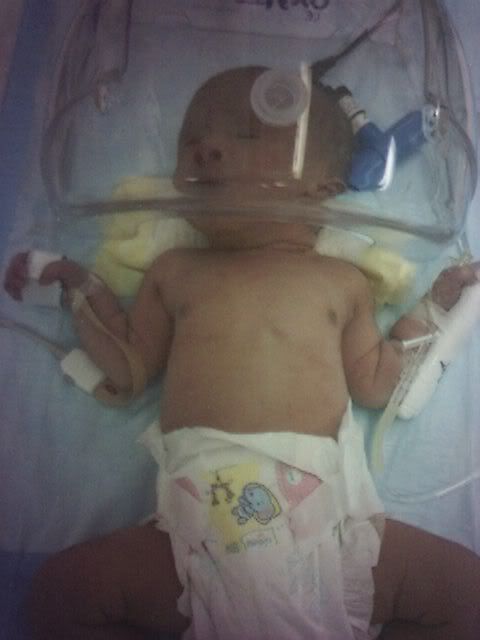
Anicius had to be in the ICU right after he was born.


Mamafess breastfeeding no.six while he was in ICU.


The recent case of a poor mother from the Chinese countryside hired to breastfeed an affluent city-dweller’s baby has brought memories of the first time I breastfeed my eldest son seventeen years ago. My husband and I have read that breast milk was most suitable for a baby and as a mother, I was eager to give my son the best. Luckily, I was able to produce a lot of milk. By the third month, I have managed to freeze about twenty (9 oz) bottles to be kept for future use.

At that time, one of my friends had just adopted a child called Vincent. As he was allergic to soya and cow milk, he could only drink breast milk. There was an urgent called to ask for donation of breast milk and his father became the milkman of Singapore as he went all over Singapore collecting breast milk for his adopted son. We contributed as much as we could spare. I remembered that on his first birthday, his adopted parents invited all the mothers who have contributed to a big birthday party. If my memories served me well, over fifty mothers, regardless of race or religion, came forward to help baby Vincent. It was an unforgettable sight to see so many bottles of frozen breast milk. None of us were paid but the smile of Baby Vincent was priceless.

Now that professional wet nurses have appeared in many cities across China due to rising incomes and a demand for healthy milk, it has started a fierce debate over the ethics of the ancient art of wet nursing. Many object to the fact that some mothers are unwilling to nurse babies because they hope to maintain a slender figure. Of course there is the grey area when mothers are unable to nurse because they either do not have milk or suffer from infectious diseases. Although the wet nurses claimed that they are only providing an economic service and thus are justified to be paid, some worried that this would deprive the wet nurse own child from having the benefit of breast milk.

Is this a case of exploitation of the poor by the children of rich parents? How do we price a bottle of breast milk? What about the health of the wet nurse? How does one determine the quality of the breast milk? Is there a co-relationship between the nutrition in-take of the wet nurse and the quality and quantity of breast milk? Would some women be treated like cows whose sole existence are to produce breast milk for other children?

In Singapore, as more women become educated about the benefit of breast milk, they would be motivated to breastfeed their children. Would there come a day when a mother who could not or would not breastfeed take the easy road and pay for a wet nurse? How would CASE response to such a case? Would the AVA authority steps in and consider the wet nurse as part of primary production?

Just as we do not allow the sale of blood or organ, we should not allow the sale of breast milk for by doing so we would treat the body as a commodity. All donation of breast milk should consider as gift so as to preserve the dignity of the human spirit. If we do not make a firm stand against the sale of breast milk be it from a wet nurse or from a bottle, we would soon find it acceptable to trade in blood, organ, sperm and egg.

Tuesday, March 6, 2007

Ready for sex?(author's title)

By Aubrey Ess

Recently, the case of a nine-year-old mother was in the news. While only in Primary Three, this girl had already had sex with her boyfriend many times, behind her parents' back.

During her pregnancy, she had to cope with all the hassles of having a baby: morning sickness, labour pains, not to mention any social stigma she would have had to face. Her studies and social life would also have suffered.

This is a sad case of how not only the experience, but also when one starts having sexual intercourse, can change one's life drastically.

When I was eight years old, my parents began to answer every question I had about sex. It was a decision that many parents would probably be shocked at. However, just as the timing of engaging in sexual relations is important, so is the timing of when one starts learning about the birds and the bees.

The subject will have to be taught at one point or another, because every person faces it sooner or later. Teenagers are faced with the question of having premarital sex, married couples are united through sex, and even priests who refrain from sex have to handle temptation.

I believe that such an integral part of our lives should be explained fully by our parents, so that we are prepared to handle it.

The only question is, when? During pre-school, when we are still playing with blocks and dolls? During Primary School, when we are more aware of our surroundings, and being instilled with the values of good and bad? Or during Secondary School, when we enter our teenage years, and a life far more hormonal, independent, and questioning than ever before?

Now, I have a little brother approaching his eighth birthday. When my parents told him about his "asking about sex" opportunity, his eyes lit up in exactly the same way as mine did. "Really? Okay then — mummy, daddy, can I know about sex?" the eight-year-old — intelligent but inexperienced, delighted at learning about a mysterious word, unaware yet of the profound effect it will have on his life — asked, before bursting into laughter. It was the same with me.

Perhaps at the age of eight we were not yet responsible enough to grapple with a topic like sex. After all, give one too much information too soon, and one could do regrettable things with it.

Yet my parents never simply spilled the beans. At eight, I asked questions like "what". As I grew older, and matured into my teenage years, my questions also matured into those like "when", "should" and "with whom". Also, as I asked my various questions, they revealed deeper, related things about sex that I had not even been able to comprehend.

Besides giving me factual information, my parents also made clear the dangers, precautions, religious views, and exclusiveness of sex — the basic dos and don'ts, so that I was also brought up with a moral idea of what sex should be.

Being ready to learn about sex is not about one's age. It is about whether your child is already dipping his toes into the ocean, already taking the step of finding out. When that happens, he is going to learn to swim no matter what, no matter how long it takes, simply because his curiosity pushes him on.

It is at this point that parents should teach their child about that "S" word, that subject that may make them blush or stutter, that very thing which their own child is facing.

It is wonderful that my parents are willing to be open with such a sensitive subject, so that I do not have to find out through a book, TV show, or even through actual intercourse with someone else.

The writer is a 16-year-old student. She one of the daughters of MOS.

Thursday, February 15, 2007

One out of twelve

My colleague was working as a lawyer last July, when she decided to throw in the towel and follow her dreams to be a teacher. We were curious as to why she gave up a high paying career and asked her for the reasons.

She answered that she did not want to be a lawyer but her academic result was good enough for her to qualify. Her parents encouraged her to go into the law profession even though she has no interest in it. After practicing law for a few years to satisfy her parents’ wish, she decided to do what she feels is her calling. She is much happier now.

Now that the O level results have been released, I wondered how parents will advise their children, who have taken the O level exam last year, about the next step in their academic career.

Would they be ashamed of their child if they failed to get the required 5 O level credits and thus avoid visiting relatives during Chinese New Year period? Or would they insist that their child go to a top junior collage even though the child wants to pursuit the poly route?

Some parents advised their children to go to the junior collage not because it is in the interest of the child but because they would be able to boast about it at the office. Others live their dream through their children and insist that they take up profession that their child has no interest in at all. Some still harbous prejudices against students in the art streams, or students who wants to pursuit drama, music or fashion.

Students with ‘O’ level results can now submit their applications under both the Joint Admissions Exercise and the Joint-Polytechnic Special Admissions Exercise. This is conducted annually by the Ministry of Education (MOE) to allow students who have sat for the O level examination to apply for admission to courses offered by junior colleges, Millennia Institute, polytechnics and the Institute of Technical Education. They are given until 4.00 p.m. on Wednesday, 14 February 2007 to register for the JAE. Students are given up to twelve options to put on their application form.

How would students selection these options? Will they go to a junior college because their friends are going to the same junior college? Or would they prefer a polytechnics course because they do not have to wear school uniform? Will they be pressurized by their parents to do a course that they do not like? Or will they be doing a course because they think is prestigious?

For many students, choose a course for tertiary education would be the first major decision that they make in their life. This should not be taken lightly and frivolously. An informed choice is better than a choice made in haste.

The decision should be based on the student’s interest, his talent, and his academic ability.
My daughter will be selecting her options and make her decision soon. She has visited several polytechnics and visited several websites of institute of higher learning.

On several occasions, I was tempted to maneuver her to choose a particular course that I want her to do. Sometime when she was exploring options that I do not agree with, I have to learn to bit my tongue and see her rational for her choices before I give her advise and opinions.

It is difficult to trust my daughter as a thinking rational adult who can make good decision. Sometimes, I still see her as my cute, cuddly seven years old.

But all too soon, she has blossom into a teenager soon to be an adult. I guess I must learn to let go and let her make some of life mistake, decisions and choices by herself now.

Note: She gave her mother a heart attack when she only put down one choice when given twelve options. One can only guess why she took such a step.

Wednesday, January 3, 2007

BABY STEPS

Having a large family with more than five children seems to be an anomaly in Singapore.

My peers argue they cannot afford even to have one because childcare facilities and enrichment activities are expensive. Besides, the Government is not giving enough subsidies, tax relief and other incentives, they say.

One is adamant that she will bring up only one child and added, nonchalantly, that if she is caught with a second one, an abortion – a simple procedure, she thinks – will solve the problem.

Another friend advocates passionately against bringing a child into the world as it is an evil place.

It is difficult to convince people convinced of such arguments to have children, and it will be a Herculean task for any Government to try to persuade them otherwise. Providing more fiscal incentives will only be a futile effort.

But put a cute, cuddling, cooing baby into the arms of the most reluctant, anti-baby, anti-family person, and a subtle yet perceivable transformation happens to that person.

Often, a baby brings out one's caring instincts. The baby is so completely helpless that he will motivate you to take care of him. Soon, you begin to wonder if you too can have a baby to look after.

Once this biological maternal or paternal instinct is discovered and awakened, all the logical and rational objections to having a baby will soon be forgotten.

Skeptics will argue that this is a simplistic view and they will proclaim that they are immune to this malady.

They may be unwilling to admit this, but a baby in their arms will make them more human and more alive.

So for 2007, I would like to see more mothers offer their babies to be carried by their family, relatives and friends. Better still, offer them an opportunity to babysit your child while you take a well-deserved break.

Who knows – this temporary attachment might give birth to a desire for a baby of their own.

This article first appeared in TODAY on 3rd January 2007

Thursday, November 30, 2006

LET THE CHILD OFF, AND DAMN HIM

WHEN I share with friends that we believe in caning our children, we are often met with disbelief and sometimes horror. Some would even suggest that we are barbarians.

Once, our six year old persisted in lying despite numerous efforts to explain to her the importance of telling the truth. She was caught red-handed this time and we decided to cane her.

Her grandmother became her greatest advocate; I guess she did not wish for us to inflict pain on her grandchild. But had we given in to grandma's pleas, our daughter would have learnt that she can escape the consequences of her actions.

Worse, she would have learnt that as long as an action can be rationalised away, she need not be caned.

We have a standard operating procedure for the caning session. First, the child is asked to go to the toilet to relieve herself. Then, she is required to bring the chair to us — this is the chair she bends over to present her backside for caning.

Next, she chooses the cane (normally it's the simple one). Notice that we have built up the tension for the session, so much that a light touch of the cane would bring on the maximum impact.

Of course, sometimes when the crime is very serious, we will not spare the rod and we give three or more hard thwacks on the backside that will leave red marks for a few hours, even days.

Does it work? Yes, as the fear of punishment or the memory of the caning session has made our children toe the line. Our friends are impressed that our six children are so obedient that our orders (especially their father's) are obeyed.

In our family, the father is the highest authority. Unlike the stern father figure that most of us have grown up with, my husband plays and laughs with the children. Yet they know that if they cross the line, they will get it from him.

Some fathers are afraid of appearing authoritative or aloof to their children. They try to be a "good buddy" or a good-time Joe to their children at all times.

By making life exclusively a game, they show not only that life is not serious but that authority is frivolous. Believing that he is doing good for his children, such a father instead creates a vacuum of authority in their mind.

Many teenagers, too, rebel against the discipline of the home. French author Henri Delassus warned against this phenomena in the early 20th century. He argued that a great mistake has been to ignore the traditional emphasis on the role of authority a husband and father should exercise.

I am not suggesting that the father should be an autocrat, where his home is his castle, his word is law and his wife and children tip-toe around his wishes. But by being authoritative, the father provides the boundaries for the child to grow up in a secure environment. The child knows that he can be free to grow and explore as long as he stays within the limits.

And if the child should cross the line, punishment must be immediate and painful. Too often, parents are afraid to allow their children to feel pain and deprivation. Instead, they explain away the children's wrongdoing, saying that he or she is still young, still growing.

The first concept my baby learns is the word: "No". As he crawls around the house, we say "no" if he touches the plug or other out-of-bounds items. If he insists, we hit him lightly on the hand and he soon learns that certain things cannot be done.

Of course, sometimes he cries and throws a tantrum, and we are tempted to give in. If we do so continuously, then he will grow up a spoilt brat. But if we ride out the crying storm, we teach him that blackmailing us is an ineffective way to get our attention.

Disciplining a child cannot be outsourced to the school. If a child is well brought up at home, he will learn to function well in school and there is no need for the school to discipline the child.

When a child does misbehave in class, the parent must support the school in applying punishment in accordance with its rules.

The greatest disservice any parent can do is to override the schools' authority — if the child gets away scot-free, he grows up leaning that he can break the rules of society.

"There is nothing to fear as my papa will bail me out," he thinks. That is, indeed, a fearful thought.

This article first appeared in TODAY on 30.11.2006